Test

Flexibility and Choice Not Contracts

Locked Into a Long-Term Cooking Oil Contract?

There’s a better model that gives back your choice—and the value of your oil.

For years, one dominant model of automated cooking oil management has asked foodservice operators to trade control for convenience.

The provider supplies the equipment. The provider supplies the fresh oil. The provider collects the used oil. And all of it can be tied together through a long-term contractual relationship.

Automation was the right idea. Locking every part of the oil lifecycle to a single vendor wasn’t.

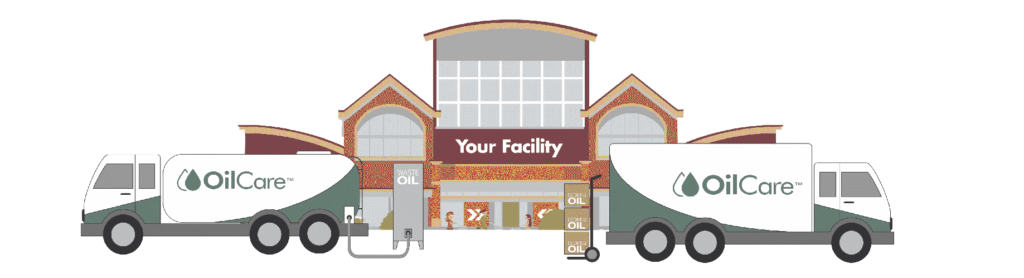
Today’s restaurant, convenience store and grocery operators have another option. OilCare® combines the convenience of turnkey oil management with something the legacy bulk-oil contract model wasn’t built around: choice.

Choose the services you need. Choose where you purchase your cooking oil. Choose who collects the used oil. Retain the economic benefit of that recyclable commodity. Own your equipment rather than paying for it indefinitely. And change the arrangement as the needs of your business change.

OilCare is a sister company of Frontline International that builds services such as fresh-oil delivery, used-cooking-oil collection, data management, and rebate administration around Frontline’s proven oil-management equipment. Operators can select the services they need—or choose a completely turnkey program—without surrendering control of the underlying business decisions.

Convenience shouldn’t require surrendering control

Every foodservice operation is different. A national QSR chain has different needs than a regional convenience-store operator, grocery prepared-foods department, or independent restaurant.

Yet the legacy bulk-oil model can place equipment, fresh-oil supply, service, and used-oil collection under the control of a single provider.

That may sound convenient. But it also removes competitive pressure from several important parts of the equation.

What if you want automated oil-handling equipment but already have a preferred oil distributor? Keep it.

Want to keep sourcing your own fresh-oil to maximize your control over market pricing, but need a renderer (oil recycler) relationship that works more reliably? Keep buying your oil.

Want Frontline equipment, volume and rebate monitoring and data without outsourcing every other oil-management decision? That’s an option.

Turnkey should mean, “We’ll handle everything you want us to.” It shouldn’t mean, “You have to buy everything from us.”

Read the contract. The fine print matters.

Bulk oil mousetrap

This distinction becomes especially important when operators look closely at what they actually agreed to under a traditional bundled oil-management program.

With OilCare, the restaurant or store retains the economic benefit of its used cooking oil. Under some legacy bulk-oil agreements; however, the operator contractually assigns ownership of that used oil to the service provider.

In fact, one leading legacy bulk-oil supplier’s own current published terms require customers to purchase all cooking oil used in its oil systems from that provider. Those same terms state that the customer assigns the provider title and all rights to the used cooking oil as soon as that oil is returned to the system. 

Think about what that means. Oil-purchasing freedom can disappear on the way into the fryer, while ownership of the commodity value can disappear on the way out.

That arrangement may have made sense to an operator when the system was first installed. But restaurants, c-stores, grocery stores and other foodservice operations increasingly recognize the value of maintaining control over both sides of the transaction.

Used cooking oil isn’t merely waste. It’s a recyclable commodity with measurable market value. If your operation produces it, you should understand who owns it, how its value is calculated, and who ultimately benefits when it is collected and sold.

Competition is an operator’s friend

Cooking oil is a significant operating expense, and its cost changes with agricultural markets, transportation costs, supply conditions and competition. Operators purchasing boxed oil through traditional competitive distribution channels retain the ability to periodically test the market. They can evaluate suppliers, negotiate pricing, choose among oil varieties, and respond when market conditions change.

That competitive pressure matters.

Under a bundled bulk-oil arrangement, however, the oil supplier may also be the equipment provider, service company, and owner of the used oil.

So it’s worth asking a simple question: If your oil supplier is also your equipment lessor, service provider and the owner of your used oil, where does competitive price pressure come from?

OilCare customers can use quality jug-in-box (JIB) oil in the variety and formulation that fits their operation. They can continue purchasing through an existing distributor or incorporate fresh-oil supply into their OilCare program. We, too, constantly seek the best market pricing to optimize customer value.

Either way, customers retain the ability to make purchasing decisions based on what works best for their business.

Your used oil has value. Keep it.

The economics don’t stop when fresh oil goes into the fryer.

Used cooking oil has become a valuable feedstock for renewable fuels and other products. In 2025 alone, one major legacy bulk-oil provider reported collecting and recycling more than 393 million pounds of UCO—nearly 100 percent of which it said was converted into renewable diesel, biodiesel or sustainable aviation fuel.

There is a reason companies want that oil.

With OilCare, the value generated from a customer’s UCO flows back to the customer through transparent rebates. Operators can see what they generate, understand its value and incorporate those returns into the economics of their oil-management program.

That can turn what was once treated as kitchen waste into a meaningful revenue stream.

Equipment should create freedom, not dependence

Frontline equipment

Technology should simplify operations.

Automatic fresh-oil filling reduces manual handling. Closed-loop used-oil removal improves safety and cleanliness. Filtration technology helps extend oil life. Monitoring technology provides visibility into consumption, recovery, equipment performance, and pickup scheduling.

The leading bulk-oil providers deserve credit for helping demonstrate the operational advantages of automated oil handling. Their own systems emphasize bulk delivery, automated filtration, monitoring, hands-free disposal, and UCO recycling.

The question now is whether achieving those operational benefits should require surrendering purchasing flexibility and commodity value.

Frontline and OilCare don’t believe it should.

The right equipment should give operators more control, not make them dependent upon the company that supplied it.

Ownership matters. Purchasing flexibility matters. Data transparency matters. And the ability to change providers or services when the economics change matters.

Know what it really costs to stay

For an operator already in a long-term cooking-oil arrangement, changing providers can initially appear complicated or expensive.

That’s why the first step isn’t simply comparing this month’s service invoice. Instead, look at the entire relationship:

  • What are you paying for fresh oil?
  • Can you competitively source that oil?
  • Who owns your used cooking oil?
  • Are you receiving its market value?
  • What are you paying for equipment?
  • Will you ever own that equipment?
  • What happens at renewal?
  • What does it cost to leave?
  • What operational data belongs to you?
  • How much flexibility will you have three or five years from now?

A transition can look expensive if you consider only the immediate cost of changing providers.

Remaining in the existing arrangement can look inexpensive if you don’t account for years of oil purchasing, equipment payments, forfeited UCO value and lost competitive flexibility.

The right comparison is the total oil management cost and the cost of staying versus the total value of taking back control.

A better model for oil management

The next generation of cooking oil management isn’t about going backward to carrying hot oil around a kitchen or asking employees to manually manage an inherently messy process.

Automation won.

Now the business model around automation needs to evolve. OilCare gives operators the ability to choose the fresh-oil supplier that works best for them. Select the used-oil collector they prefer. Use intelligent Frontline equipment that improves safety and efficiency. Own that equipment. Capture the economic value of recyclable used oil. Access transparent operating data. And scale services up or down as business needs change.

In an industry where every basis point matters, flexibility itself has value.

The best oil-management system isn’t the one that locks every piece of the process together.

It’s the one that gives operators the freedom to pull those pieces apart.

Hands-Free Cooking Oil Handling for National Safety Month

Frontline International’s Direct-Plumbed® System helps keep workers out of harm’s way

May 11, 2026—This June marks the 30th anniversary of National Safety Month, an observance from the National Safety Council dedicated to “keeping people safe from the workplace to anyplace.” Workplace safety is a core principle on which Frontline International was built, as a maker of smart solutions for the management of fats, oils, and grease in foodservice kitchens. One of Frontline’s signature products rooted in safety is the Direct-Plumbed® System, a closed system that carries used cooking oil from the fryer to a containment tank without ever being touched by human hands.

Frontline Hands-Free Cooking oil Handling

The hot oil and grease used in fryers is widely considered the single greatest safety threat in foodservice kitchens. There are many different ways it has the potential to harm: starting fires, causing burns, prompting slips and falls (week four of National Safety Month focuses on preventing slips, trips and falls), and contributing to unsanitary conditions. 

The Direct-Plumbed system mitigates virtually all of these by keeping used oil contained, first within its piped-in tubing, then locked safely inside a containment tank. With the push of a button, used oil leaves the fryers and flows into the system’s secure waste oil containment tanks inside or outside the facility. No more carrying a dangerous, sloshing bucket of hot oil to a dumpster!

For complete hands-free cooking oil, pair it with Frontline’s EZ Oil™ System for fresh oil. Jug-in-box oil is loaded into the EZ Oil rack, where it flows into the fryer vat. There is never any pouring out by hand of a bulky box or jug.

Frontline International’s direct-plumbed solutions for both fresh and waste oil make handling hot oil obsolete. That translates to potential savings on insurance, workers’ compensation, and employee downtime; greater employee safety; and cleaner floors and grounds. The equipment is modular and customizable and can be adapted to nearly any size space, even small and complex store layouts.

For more information, visit www.frontlineii.com.

Frontline International Names Joshua Smith New Sales Manager

Professional experience in operations and equipment, sales focus on relationships and solutions 

April 8, 2026—Frontline International, maker of smart management solutions for foodservice kitchens’ fats, oils, and grease, is pleased to announce the hiring of Joshua Smith as its new sales manager. Working closely with leadership, Smith will be responsible for analyzing market trends, establishing sales goals and strategies, educating new customers and the sales team, and building strong customer relationships.

Joshua Smith

Smith has spent his entire career in the foodservice industry, first in restaurant operations before moving into the equipment side of the business. “It enables me to see the whole picture,” said Smith. “I have firsthand experience with the pain points inside restaurants and also understand how to use product technology to solve those problems.”

Over the course of his career, Smith has developed deep experience in fryer-focused equipment sales and a strong understanding of the operational challenges surrounding fryer management. That includes safety concerns, labor demands, cleanup inefficiencies, and the high cost of failing to maximize oil life. For Smith, joining Frontline represents a natural next step: an opportunity to bring customers a solution that addresses those issues more completely and strategically than traditional fryer equipment alone.

Smith’s sales philosophy emphasizes the importance of building relationships with customers, gaining a true understanding of their operations, and determining how Frontline’s FOG handling equipment fits their needs and helps their bottom line. “At Frontline, we engineer equipment and technology that no one else is doing,” said Smith. “It enables us to help customers in ways that literally no one else can.”

Prior to joining Frontline, Smith served as sales manager for a multi-state foodservice equipment distributor and service provider. “We’re excited about the energy, enthusiasm, and well-rounded industry knowledge that Josh brings to this position,” said Giovanni Brienza, president of Frontline International. “He’s the right person to spread our message and reach, growing our business while making sure legacy customers are well taken care of.” 

As Frontline International continues to innovate and evolve, Smith’s passion for solving real-world foodservice challenges will help carry that mission forward.

Frontline International’s Filtration Machine Extends Oil Life Up To 50%

Designed to work with any commercial fryer, uses paper or stainless steel filters

When a foodservice kitchen’s fryer doesn’t come with built-in filtration, Frontline International’s Filtration Machine can fill the gap. It extends oil life by up to 50%, which helps reduce costs, and helps standardize the taste and quality of food. Food consistency is crucial to the customer experience and building brand loyalty. An investment in properly filtered oil is an investment in overall profitability.

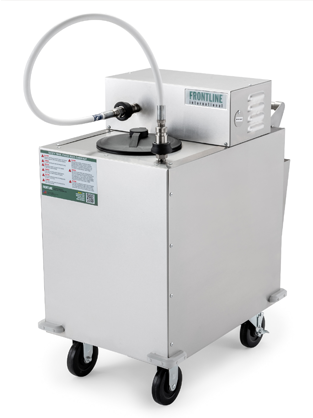
The powerful and easy to use Filtration Machine is designed to operate with any commercial fryer. This flexible, standalone system holds 75 pounds of oil and pumps full in just two minutes. It is made of 100% stainless steel and rolls on smooth, heavy-duty casters outfitted with swivel-front brakes.

Because filtration procedures vary depending on store volume and the types of food that are being fried, the Filtration Machine is highly adaptable to individual applications. Establishments will need to filter oil less often when frying french fries because they produce fewer fall-off food particles to contaminate the oil. Conversely, breaded and battered products require more filtration because they produce more fall-off particles, degrading the oil faster.

Since proper filtration is so important, the Filtration Machine easily switches between different types of filter media—disposable paper filter element or reusable stainless steel—according to the kitchen’s needs and oil usage. Frontline International’s representatives can advise which filter is recommended for a specific operation, based on the type of food fried and the frequency of frying.

The machine also helps give used cooking oil (UCO) a final scrub before it is transported to a containment tank awaiting pickup by a renderer. Filtered UCO commands higher rebates in the recycling market. 

Focus On Your Facility … Let OilCare® Manage Your Cooking Oil

Fully customizable fresh and used oil solutions for cleaner, more profitable facilities

Does maintaining a clean, safe, healthy facility have to become more difficult when cooking oil is involved? Absolutely not. OilCare® is the only fully customizable solution that has an answer for every cooking oil pain point, while helping with profitability, consistent food quality, and efficient disposal. OilCare, a turnkey oil management service and sister company to Frontline International®, helps facilities with foodservice components optimize their operations, manage expenses, and ensure compliance, all with the flexibility of choosing all or only the services they need.

OilCare builds a suite of cooking oil related services around Smart Oil Management® equipment from Frontline International. Services offered include fresh oil delivery, used cooking oil collections, high-value rebates for used oil, and data management and analytics that inform smarter decision-making. 

With Frontline International cooking oil management equipment at the center of every service, clean, efficient, and safe oil handling is built in. The result is cleaner facilities and cleaner exterior areas—from parking lots and loading zones to dumpster pads. And with end-to-end automation, employees spend far less time around hot oil and greasy conditions, reducing slip and burn risk.

OilCare handles all things fats, oils, and grease for facility managers. Always get the best price for fresh, jug-in-box oil—higher-quality and better-tasting than bulk—with no unlimited contracts. Used oil services include free pickup by national recyclers and full rebate money each month. Data collection options that are right-sized to each business, from small standalone kitchens to high-volume enterprises and multi-units.

It’s a complete bundle of oil management services, fully customizable to user preference and need.

OilCare will be featured at the Restaurant Facility Management Association (RFMA) Conference, held March 15–17 in Denver, Colo. Stop by in booth 407 for more information.

For more information, visit https://oilcareii.com/.

Frontline International’s Used Cooking Oil Pump Station Keeps Kitchens Safe, Clean

Mounted near FOG generation, it closes the gap to far away tanks

UCO pump station

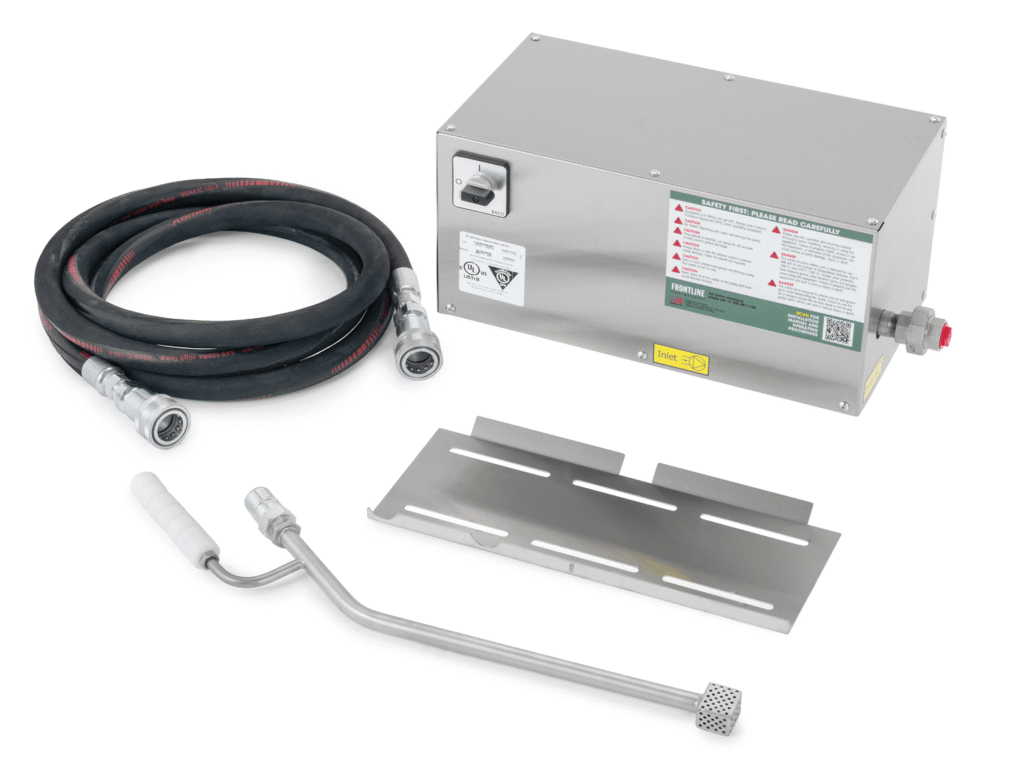
There is a safe, clean method for transferring used cooking oil even when a kitchen’s containment tank is located far away from the fryer. Frontline International’s Used Cooking Oil Pump Station can be mounted on a wall, floor, or even in the ceiling near the FOG-generating equipment. It safely moves fats, oils, and grease to a remote containment tank via a trunk line running from the top of the pump station to a valve on the tank.            

The stainless-steel nozzle connects to a high-temperature, spring-loaded suction hose. This enables clean and thorough transfer of used shortening or fats from the fryer vat, convection oven, rotisserie, and more. 

It’s also ideal for extracting fryer oil when the fryer lacks a built-in filtration pump. A permanent strainer is integrated at the end of the suction nozzle to protect the pump and plumbing from debris in the fats.

For comprehensive control, an optional, user-friendly control panel conveniently located near the pump station enables seamless pump operation. It also monitors the containment tank’s condition, displays oil level, and manages the overflow protection system to prevent spills and ensure safe operation. It is compatible with digital automation and data collection systems to maximize profits from FOG collection for recycling. 

Frontline International Introduces FOG Machine

Generous capacity mobile collection tank accepts multitude of fats, oils, and grease

Getting lost in the FOG? When your foodservice operation generates all of the “Big 3” – fats, oils, and grease – a one-size-fits-all collection solution can seem out of reach. No more. Frontline International’s FOG Machine is the only equipment you need. It collects FOG waste generated by a wide range of cooking apparatus including cooking oil fryers, combi ovens, convection ovens, and other commercial ovens.

This is the answer that large, decentralized foodservice operations have been looking for. Supercenters, malls, sports stadiums with concession stands, conference centers, airports, casinos, colleges and universities, and more can all benefit. It comes from Frontline International, a world leader in the creation of smart cooking oil management solutions for foodservice.

The key is the FOG Machine’s integral heated core, which prevents coagulation. Highly transportable on heavy-duty casters, the FOG Machine easily travels to multiple locations within your footprint. Its generously sized tank (74 gallons or 47 gallons) can accept many deposits from FOG-generating sources before it needs emptied. Collection options include pouring spent grease into the tank or using the unit’s integral pump and wand to draw it in.

This safe, temporary tank acts as an oversized caddy system. Once oil is locked inside, it can be safely transported to a centrally located permanent UCO containment tank. FOG is transferred out of the FOG Machine and into the permanent tank via safe, secure hose connection. This collection method helps eliminate the risk of burns and slips and falls, while also helping to keep kitchens, floors, and other areas cleaner and grease-free.

Frontline International Names Roman Bartoletta Service Provider Manager

Operations-focused role strengthens nationwide customer support

Frontline International, which engineers and manufactures innovative solutions for FOG (fats, oils, and grease) management in foodservice kitchens, is pleased to announce Roman Bartoletta as service provider manager. In this role, Roman oversees Frontline’s network of third-party service providers responsible for installing, maintaining, and repairing the company’s smart cooking oil management systems in restaurants and commercial kitchens across North America and beyond.

Roman Bartoletta

As service provider manager, Roman serves as the central coordinator between service providers, internal teams, and customers—helping ensure timely, high-quality service on every job. Responsibilities include coordinating field visits for installations, emergency repairs, and preventative maintenance; tracking service activity in Frontline’s portals; and working closely with customer service, shipping, and production teams to support successful job completion and equipment uptime.

“Keeping our systems running at peak performance is critical for our customers’ safety, savings, and sustainability,” said Roman. “My focus is on building a dependable, responsive service provider network so that every service call is handled quickly, professionally, and with clear communication from start to finish. When service feels seamless, our customers can stay focused on their guests and their business.”

Roman brings hands-on experience working with vendors and field service operations, including coordinating technicians across multiple regions and managing service tickets through ERP, CRM, and other digital platforms. His background includes monitoring key performance indicators, analyzing service data, and collaborating with cross-functional teams to improve response times, documentation accuracy, and overall customer satisfaction.

“Roman plays a key role in how we deliver on our promise after the equipment is installed,” said Giovanni Brienza, president of Frontline International. “His ability to manage providers, track performance, and keep jobs moving helps ensure our customers receive the level of service they expect from Frontline. As we continue to expand our footprint, his leadership in this area will be essential to our growth.”

Frontline International NamesValerie Moreland Customer Care Manager

30-year veteran brings process and efficiency acumen for fast, high-satisfaction resolutions

Frontline International, which engineers and manufactures innovative solutions for FOG (fats, oils, and grease) management in foodservice kitchens, is pleased to announce that Valerie Moreland has joined the company as customer care manager. Moreland will lead Frontline’s customer care team, helping to ensure a consistent, high-quality customer experience by developing standards and procedures, coaching team members, and analyzing customer feedback and support metrics to identify trends and drive improvements.

It’s all about advancing a customer care department that responds quickly to customer needs with on-target resolutions. “I look forward to identifying opportunities to streamline processes so we operate in the most efficient way possible,” said Moreland. “Customers are the most important part of any organization, and it’s my goal to always make Frontline customers feel well-informed and highly valued.” 

Moreland is an experienced operations executive accustomed to leading diverse professional teams to new levels of success in fast-paced environments. She has an impressive track record of more than 30 years of hands-on strategic planning, business unit development, project and product management, and customer retention. 

“Valerie’s proven ability to successfully analyze organizational performance and identify potential opportunities will serve our customers well,” said Giovanni Brienza, president of Frontline International. “Our diverse global customer base has high expectations and high standards. Through Valerie’s leadership, I know our customer care team will deliver.” 

Prior to joining Frontline, Moreland was customer service manager for GBS Corp. Past accomplishments include spearheading the start-up and development of Arthur Middleton Capital Holdings’ business units consisting of customer service, inbound/outbound sales, training, recruiting, QA, order processing, order retention, and revenue recovery.

For more information, visit www.frontlineii.com.

Frontline International Names Zack Palazzo Vice President of Sales and Finance

Frontline International, a leading maker of smart solutions for management of fats, oils, and grease in restaurants and commercial kitchens, has promoted Zack Palazzo to vice president of sales and finance. Palazzo has been with the company for more than a decade, previously serving as director of sales and finance.

A Purdue University graduate with a degree in industrial technology, he earned his MBA from Kent State University. In his new role, Palazzo will continue to lead sales efforts while taking on increased responsibility for the company’s financial health. He will focus on driving business growth, supporting customers, and developing strategies for long-term success.

Palazzo has deep experience overseeing a range of initiatives focused on developing Frontline’s customer base, growing sales, and enhancing tools and training for the company’s sales force. He also has a unique understanding of how critical technologies are the backbone of today’s foodservice kitchen. 

“Technology is always evolving and Frontline’s success is rooted in using new technology in creative ways to make foodservice kitchens run safely and more efficiently,” said Palazzo. “Our goal is a streamlined experience that improves food quality and consistency. This new role enables me to further our message of enhancing safety, savings, and sustainability, ingrain it within our sales force, and leverage it for market gains.”

“Zack is key member of our leadership team and we look forward to the additional value he will bring to our organization and customers in this new role,” said Giovanni Brienza, president. “His broad understanding of our product, business, and customers gives him acute insight into our value proposition, how to best communicate it, and how it translates into growth. We’re looking forward to even greater successes as he serves in this new role.”“As we continue to grow worldwide, a strong and innovative sales department is vital to expand our reach into new territories,” said John Palazzo, founder and CEO. “Zack’s knowledge of our industry and products well-positions us for this continued growth.” 

get_sidebar();